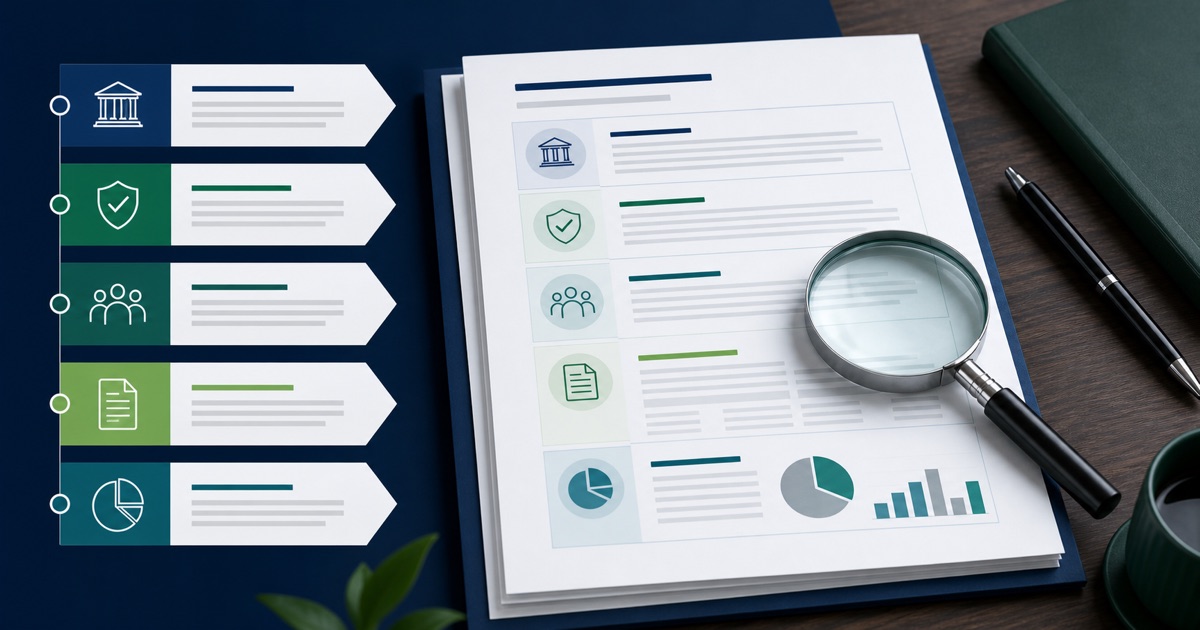
An Irish company report brings available public company information into one review. Read it as a structured starting point: confirm the legal entity first, then assess status, people, filings, charges and financial information in date order.
1. Identity and registration
Match the legal name, CRO number, company type, incorporation date and registered office to your contract, invoice or supplier details. A trading name may not be the legal company.
2. Current status
Status tells you how the CRO records the entity. Normal is not proof of trading or solvency. Strike-Off Listed, liquidation, receivership, examinership, Struck Off or Dissolved require closer review.
3. Directors and secretary
Check who is recorded, the role and appointment dates. Do not assume directors own the company or that same-name results identify the same person. Use source filings for material decisions.
4. Filing history
Read B1 annual returns, B2 address changes, B10 officer changes, resolutions and notices as a timeline. Gaps, late returns or sudden changes justify questions, not conclusions. See how to read CRO filing history.
5. Charges
Charges record security interests; they do not show a live loan balance. Read registrations alongside later C6 or C7 satisfaction filings.
6. Financial information
Accounts are historical. Check the financial period end, filing date, whether the public accounts are abridged, and any net-assets or going-concern disclosures. They cannot prove today’s cash position.
Use it for a decision, not a verdict
For credit, supply or acquisition decisions, combine the report with current references, insurance, payment controls and professional advice proportionate to the risk. Obtain CRO CORE documents if you need the official filing.
Ready to review a company?
Search free, then order a Businesses.ie company report for a consolidated public-record review.
View company reports