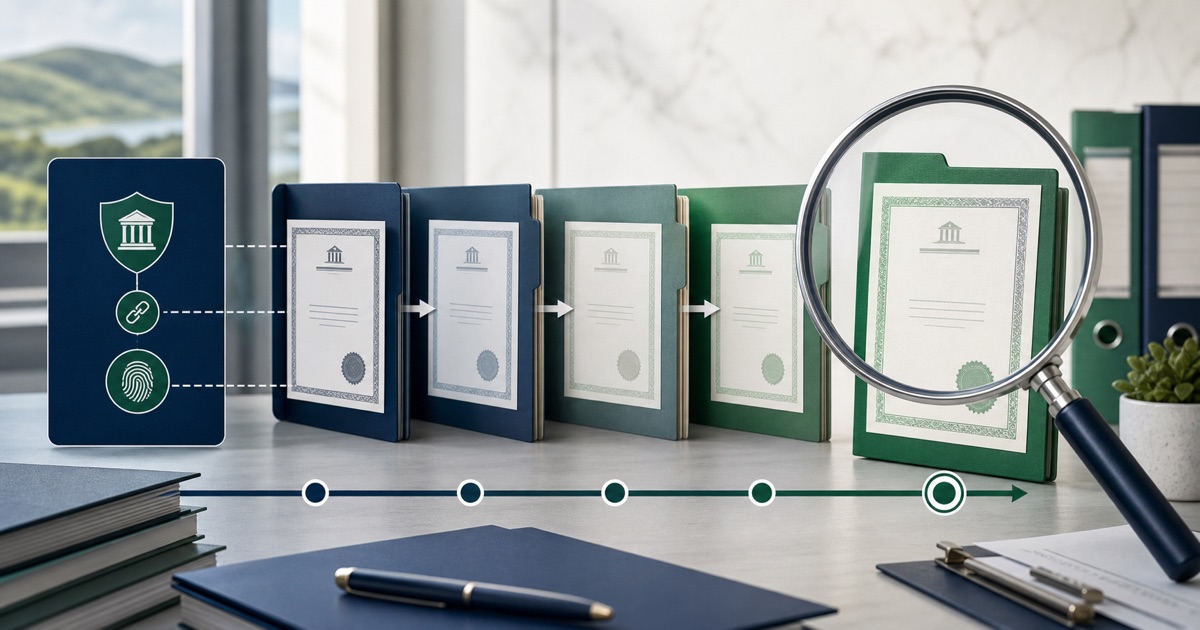
The safest way to find an Irish company’s previous name is to identify its CRO registration number, then read the filing history for the name-change record and certificate. A company can change its legal name, but that does not create a new legal entity.
Start with the CRO number
Names can be similar, abbreviated or changed after an acquisition. The registration number is the durable identifier that lets you connect an old name, current name, filings and public accounts to the same company.
Search the company record
Search using the current legal name, former name or, ideally, its CRO number. Confirm the company type, registered office and incorporation date before concluding that two names belong to the same entity.
How to find a previous Irish company name
- Find the CRO number. Use an invoice, contract, company profile or CRO search result.
- Open the filing history. Review it as a chronology, not merely as a list of documents.
- Look for a G1Q and related certificate. CRO identifies G1Q as the special resolution for a change of company name.
- Check the effective date. The new name may only be used after the CRO has issued its certificate of change of name.
- Compare later filings. A B1 annual return, B10 officer notice, charge or account filed after the change should use the new name but remains part of the same entity history.
- Get the official filing if the point matters. CRO CORE is the authoritative source for the document image and certificate.
Why the CRO number matters more than the name
A name is a label; the CRO number identifies the incorporated company. A company can rename itself after a rebrand, group reorganisation, acquisition or a change of business direction. Searching the former name alone can also return a different company with a similar name.
| Check | What it proves | Limitation |
|---|---|---|
| Current legal name | How the entity is presently recorded | It may not reveal a former identity by itself |
| CRO number | The link to the same incorporated entity | It does not show ownership or trading performance |
| G1Q / certificate | The formal registered name change | Read the actual filing for its date and details |
| Business-name record | A registered trading name and its proprietor | It is not automatically a company-name change |
Company name change versus trading name
Do not confuse a company’s legal name with a business name. A body corporate may register a business name, while a sole trader or partnership can also operate under one. A business-name registration does not create a separate legal personality. On a company’s own documents, the underlying legal company and CRO number should be identifiable.
If the question is “who is behind this brand?”, search the business-name record and then match the named proprietor to the company profile. Read our guide to checking whether a business name is registered.
What a formal name change requires
The CRO states that an existing company can change its name by special resolution with the Registrar’s written approval. The application requires Form G1Q, an amended constitution and the applicable fee. Once registered, CRO issues a certificate of change of name and the new name is effective from the certificate date.
CRO guidance also says approval will not be granted if the company is not up to date with annual returns or is on a strike-off or prosecution list due to annual-return non-filing. This is useful context when a company has a confusing history: an incomplete name-change attempt is not the same as a completed change.
How to use name history in due diligence
Previous names are often relevant before extending credit, acquiring a business or checking a supplier. Search both old and new names for public reviews, contracts, Gazette notices, charges and litigation references, but keep the CRO number as your anchor. A rebrand is not evidence of wrongdoing; it is simply a reason to avoid losing relevant history.
- Compare accounts before and after the name-change date.
- Review directors and secretary filings around the change.
- Check whether the registered office or company type changed too.
- Reconcile charges, insolvency notices or public lists under either name.
- Ask the company to explain the commercial context where the decision is material.
What previous names cannot tell you
A historical name match does not prove the company has the same shareholders, assets, management or trading activity it had at that time. It also does not prove that a similarly named company is connected. Follow the legal entity, officers, share filings and current evidence rather than making an assumption from a name alone.
Need the full public company timeline?
Search free, then order a Businesses.ie company report to consolidate available identity, status, officer, filing and financial information. Use CRO CORE for official source documents.
Official sources and review note
This guide was reviewed on 4 August 2026 against CRO guidance on changing a company name, the CRO forms directory, constitution alteration and business-name registration. It is general information, not legal advice.